The Supreme Court has questioned the Centre's decision to cap trade margins on anti-cancer drugs at 30 per cent, asking why similar restrictions could not be extended to other medicines and medical consumables, citing glaring disparities between procurement costs and maximum retail prices (MRPs).

'While higher prices may create some financial burden for patients and caregivers in the short term, uninterrupted access to treatment remains the greater priority.'

The National Pharmaceutical Pricing Authority will monitor how companies are increasing prices of non-scheduled drugs.

'The Chinese military cannot advance much in Ladakh, even if they want to.' 'Similarly, in Arunachal Pradesh, they can rename a village or two, intrude here or there, but cannot do much more realistically.'

Refusing to divulge identity of the companies, sources indicated that three of them are based in Delhi and the remaining are in Maharashtra.
Move is the first in a series of steps to help pharma industry.
In a decision that would impact the entire pharmaceutical industry, the National Pharmaceutical Pricing Authority (NPPA) has fixed the prices of 130 common drugs and antibiotics.
The department of pharmaceuticals turned down a review petition by drugmaker Cipla against a price fixation order by the National Pharmaceutical Pricing Authority, slashing the price of Dytor Plus, a medicine for kidney and heart ailments.
NPPA seeks data from firms to revalidate existing prices.
The move is in line with the NPPA's recent policy of putting a cap on prices.
The drug regulator recently asked some domestic companies to cut prices of insulin while MNCs, which are major players, are allowed to set their own price for the drug.
Pharmaceutical companies which increase prices of their medicines beyond 10 per cent in a year will face regulatory action.
The National Pharmaceutical Pricing Authority has revised prices of 440 medicines. Around 300 medicines have seen price cuts, while the others have seen a hike, sources said. The extent of the revisions is not known as yet.
Now, the companies need to get National Pharmaceutical Pricing Authority's nod for changing medicine composition. If they flout norms, government will take penal action.
NPPA denies price hike on Sanofi, Novartis, and Allergan products.
The move brings an additional 15 per cent of the retail medicine market worth over Rs 4,000 crore (Rs 40 billion) under direct price control. All domestic companies, including drug majors like Ranbaxy, Cipla, Lupin and Dr Reddy's, have syrups and tonics in their product portfolio.
Novartis India is up in arms against a two-month old decision of the National Pharmaceutical Pricing Authority to reduce the price of its flagship brand Voveran on public interest grounds. The annual sales of Voveran, the brand name for pain reliever medicine diclofenac, exceed Rs 100 crore and account for one-fourth of the company's total sales turnover. The company has filed a review petition with the chemicals and fertilisers ministry against the authority's decision.

The National Pharmaceutical Pricing Authority has decided to have one price for basic utility condoms and the other for pleasure condoms.
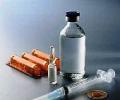
Another cap for imported insulin; domestic manufacturers cry foul.

Replying to supplementaries during Question Hour in the Lok Sabha, minister of state for chemicals and fertilisers Srikant Jena said the National Pharmaceutical Pricing Authority has been asked to look into demands for bringing 23 anti-cancer drugs within the ambit of price control.
In a move likely to influence future drug price regulation in the country, the National Pharmaceutical Pricing Authority (NPPA) has started a process to understand how other countries carry out this function.The authority has already studied the relevant regulatory systems in at least eight major countries. It has also finalised a round-table meeting on April 11 in New Delhi to sensitise stakeholders on the need to have an international outlook.
The price regulatory pharma body has set limits to the extent pharma companies can increase the price of medicines in a year.
NPPA will begin analysing pricing trends of 74 bulk drugs that come under the government-notified price-controlled list every quarter.
National Pharmaceutical Pricing Authority has for the first time fixed the prices of 27 formulation packs including 'Livadex' injection and 'Lederplex T liquid'.
The Union ministry of chemicals and fertilisers has initiated a move to bring all essential medicines sold in the country under a price cap.
The new drugs to come under price control include commonly-used antibiotics and painkillers

The first-ever study conducted by the National Pharmaceutical Pricing Authority (NPPA) on cancer medicines has found huge price variations among different brands of same medicines sold in the country.
Govt has given the medicine price regulating body a freedom to control prices of medicines.

Recalling or relabelling medicines already in the supply chain before September 22 will not be mandatory, the finance ministry said on Tuesday, issuing a fresh set of frequently asked questions (FAQs) to address industry concerns following the announcement of goods and services tax (GST) revisions.

The government has been stringent with pricing changes. Prices of 651 essential medicines came down from April 1, 2023 by 6.73 per cent with the government capping ceiling prices of these drugs.
The government is actively considering bringing 355 life saving drugs under price control and take a few additional measures to help the poor and below poverty line (BPL) families, once the Union Cabinet approves National Pharmaceutical Policy.
Ranbaxy Laboratories Ltd said it has not received any notice from National Pharmaceutical Pricing Authority to deposit Rs 15 million as penalty for pricing flaws.

India has capped the prices of 36 drugs, including those used to treat infections and diabetes, in its latest move to make essential medicines more affordable, a senior official of the country's drug pricing authority told Reuters on Friday.
